
The Application Process, Stage by Stage
Due diligence first, approval second, contribution third, passport last. Agents quote two to four months — an industry average, not a government commitment.
Reviewed by Tarek Muhammad, Associate Partner
Obtaining a second nationality through Vanuatu is possible, but it’s a precise legal procedure. Not just paperwork. Success demands a meticulously prepared application, clear evidence of funds, and a complete understanding of Vanuatu's Citizenship Act [CAP 112]. The stage that most often causes difficulty is evidencing where the funds came from, particularly where they were accumulated in digital assets, and that is where the preparation concentrates.
Vanuatu Citizenship by Investment - A legal pathway to obtain citizenship in Vanuatu by making a significant financial contribution to the country's Development Support Program (DSP). This process, governed by the Citizenship (Development Support Program) Regulations Order No. 33 of 2019, is distinct from ordinary naturalisation and does not require long-term residency.
Citizenship Act [CAP 112] - The primary legislation that governs all forms of acquiring and losing citizenship in the Republic of Vanuatu. It outlines the powers of the Citizenship Commission and the requirements for naturalisation, descent, and marriage-based applications.
Understanding the Risks and Complexities of Applying for Vanuatu Citizenship
Applying for Vanuatu citizenship carries both opportunity and real risk. The main concern? A mismanaged application. This can lead to outright rejection and the forfeiture of thousands in non-refundable government fees. Recent geopolitical shifts have also changed the strategic value of a Vanuatu passport, making a successful, legally sound application more critical than ever.
The United Kingdom's decision to impose visa requirements in July 2023, followed by the EU’s suspension of its visa-waiver agreement in 2024, directly reduces the passport's power for global travel. This shift puts a much sharper focus on Vanuatu's other advantages, like its favourable tax laws and its value as a stable second home.
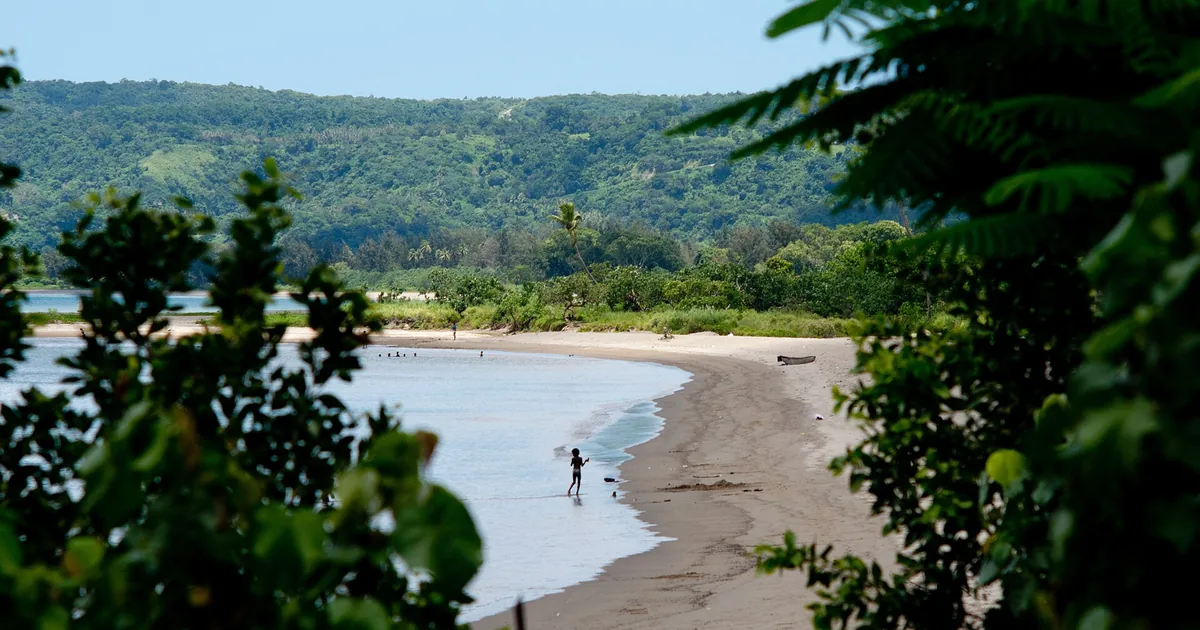
Every application is strictly governed by the Citizenship Act [CAP 112] and scrutinized by the Vanuatu Citizenship Commission. Any error—a mistake in documentation, a failure to prove the source of funds, a slip-up in the due diligence process—can trigger immediate rejection. It's critical to distinguish between the fast-track investment routes designed for global investors and the far slower ordinary naturalisation process, which requires a decade of residency. Understanding which path fits your situation is the first and most vital step, and it's where expert guidance becomes indispensable.
The Two Primary Legal Routes to Vanuatu Citizenship
Vanuatu law offers two completely different pathways to citizenship. One is a slow, residence-based route for long-term inhabitants. The other is a fast, investment-based route for foreign nationals. Each is governed by different laws and serves a different purpose.
Citizenship by Ordinary Naturalisation
This traditional route is defined by the Citizenship Act [CAP 112] as ordinary naturalisation ; it is not an investment program. The core requirement is 10 years of continuous and lawful residence in Vanuatu, something that must be proven with official records from the Department of Vanuatu Immigration and Passport Services.
Prospective citizens must submit the official Form A, show a connection to the community, pass a Bislama citizenship test, and be of "full age and capacity." This path is meant for people who have genuinely built a life in Vanuatu over a decade, not for someone seeking a quick second passport.
Citizenship by Investment (CBI) Programs
In sharp contrast, the Citizenship by Investment (CBI) programmes provide A short path to a certificate of citizenship. These are governed by separate legal orders, primarily the Citizenship (Development Support Program) Regulations Order No. 33 of 2019. The two main programmes available are the Development Support Program (DSP) and the Vanuatu Contribution Program (VCP).
Critically, these programs have no residency requirement. They were created specifically for foreign investors who want the security and benefits of dual citizenship and a second passport. For almost all international applicants, this is the only viable path.
The Vanuatu Citizenship by Investment Application Process: Step-by-Step
The investment route is the most direct way to get citizenship. The process is highly structured. One mistake can cause major delays. Our job is to manage this entire process for you, preventing errors before they happen.
Step 1: Initial Vetting and Choosing an Authorised Agent
You cannot start this process alone; it must be initiated through a government-approved agent. The first step is a preliminary background check to confirm you are even eligible. This quick screen ensures you don't come from a restricted country (like Iran, North Korea, or Yemen) and have a clean criminal record, making you a viable candidate from the outset.
Step 2: Document Collation and FIU Due Diligence
Next comes the document gathering. You must assemble a detailed file of personal documents, including certified copies of your passport, birth certificate, and police clearance certificates from your country of origin and any country you've lived in for a significant time. You also need detailed financial statements to prove the source of your funds. We provide a precise checklist and review every page to ensure it meets the strict standards of Vanuatu's Financial Intelligence Unit (FIU).
Here, the first major hurdle appears. A non-refundable FIU due diligence fee of approximately USD 5,000 is paid, and your file is sent for a deep background check. This is where most unqualified applicants get screened out. A "hit" on this check almost always means the end of the application.
Step 3: Submitting the Citizenship Application and Main Investment
Once you get the all-clear from the FIU, the full citizenship application is formally submitted to the Citizenship Commission. The Commission reviews the file and, if satisfied, issues a pre-approval. Only after you have this official pre-approval are you required to transfer the full investment donation. This structure protects your primary investment until your eligibility is already confirmed.
Step 4: Approval in Principle and Taking the Oath
After the full investment is received and verified by the government, what remains is the Oath of Allegiance. Under the Commission's published notice you swear it while a Commissioner for Oaths is there in person; video calls were used during COVID-19, and your agent tells you what is accepted now. Biometric enrolment for the passport is the other step you attend yourself. Following the oath, your certificate of citizenship and new Vanuatu passport are issued and delivered directly to you.
Costs, Timelines, and Key Legal Requirements
Clarity on money and time is essential. While the Vanuatu programme has a comparatively short timeline, applicants must be aware of all costs and have realistic expectations about the timeline.
Investment and Fee Structure for the Development Support Program (DSP)
The minimum donation for the DSP is set by law and changes based on the number of people in your application.
- For a single applicant: USD 130,000
- For a main applicant and spouse: USD 150,000
- If you're a family of four (applicant, spouse, 2 children): USD 180,000
Remember, this is just the primary contribution. You must also budget for the USD 5,000 FIU due diligence fee, government application fees, passport issuance fees, and agent processing fees. A quotation should itemise the government figures separately from the agent fee, so there are no surprises.
Processing Timelines
No government can guarantee processing times. That said, a well-prepared citizenship application submitted through the DSP can often be processed within 2 to 4 months—from submission to passport in hand. This makes it one of the world's shorter citizenship programmes. By contrast, the ordinary naturalisation route requires a minimum wait of 10 years before you can even apply.
Who is Eligible to Apply for Citizenship?
The eligibility rules are clear. Applicants must:
- Have a clean criminal record. No outstanding warrants.
- Be in good health.
- Provide clear, verifiable proof of where their investment funds came from. This is a major point of scrutiny.
- Not hold citizenship from a restricted country (e.g., Iran, North Korea, Yemen, Syria).
Our initial vetting confirms your eligibility before any major fees are paid. It's a critical step that provides security and peace of mind, drawing on our experience navigating requirements for various citizenship by investment programs.
FAQ
The Application Process, Stage by Stage: FAQs
Yes and no. The investment path is incredibly fast—often just two to four months—if you meet all criteria and, crucially, work with a government-authorized agent. Using an unapproved advisor is a common pitfall that can lead to application rejection and loss of funds. On the other hand, ordinary naturalization is anything but easy. It requires ten years of continuous residence, a commitment few can make.
That depends entirely on your objectives. For someone seeking a tax-friendly home base and a solid second passport from a peaceful country, it's a fantastic option. But if your main driver is visa-free access to the UK or the EU, its value has dropped. Recent policy changes mean those routes are closed, so holders planning trips to London or Paris now need to apply for visas like any other non-exempt traveler.
The baseline donation to the Development Support Program (DSP) for a single applicant is USD 130,000. But that's not the final number. Adding the USD 5,000 due diligence fee brings the floor to USD 135,000, before government processing and agent fees are added. Underestimating these mandatory ancillary costs can stall an application mid-process, so it's vital to budget for the all-in price. The total increases for each family member you add.
You can hold dual citizenship and benefit from a very favorable tax system with no personal income, inheritance, or capital gains tax. It's your right to live in a politically stable Commonwealth nation. Plus, the passport still provides visa-free entry to 88 countries and territories. Just remember that visa-waiver agreements are fluid and can change, as we've seen with the UK and EU.
Contact Us
Schedule Your Free Initial Assessment Today
Share the details of your situation with our team, and we'll provide a prompt, confidential response. We're here to listen, answer your questions, and help you understand your legal options.
Send Us a Message
Reach Us Directly
All consultations are strictly confidential and protected by legal professional privilege.